Marites Font: Evaluating Fit, Format, and Application in Machine Embroidery
Selecting the appropriate typeface for machine embroidery requires a different evaluation process than choosing fonts for print or digital design. While visual aesthetics are important, the structural integrity of the stitch file determines whether a design will execute cleanly on fabric. The Marites font represents a specific category of digitized lettering designed to balance ornate detailing with mechanical reliability. For embroiderers using PES-compatible machines, such as Brother or Babylock models, understanding the technical specifications and practical applications of this font is essential for determining if it aligns with current project requirements.
Defining the Marites Aesthetic and Technical Profile
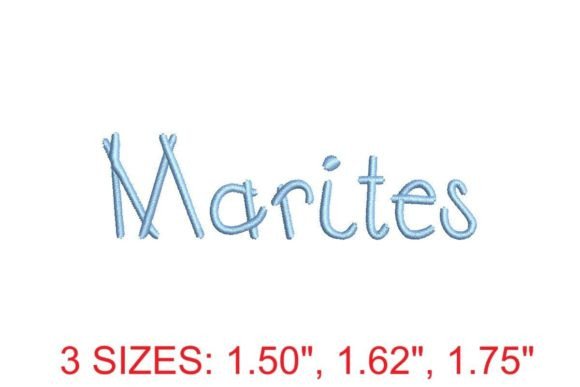
Marites is classified as an embroidery-specific font rather than a converted TrueType or OpenType face. This distinction is critical because true embroidery fonts are digitized from the ground up with stitch direction, density, and pull compensation in mind. The Marites style features intricate detailing and a classic serif structure that evokes traditional needlework. Unlike standard system fonts that may suffer from gaps, puckering, or excessive jump stitches when auto-digitized, Marites has been crafted to maintain connectivity and flow.
The primary technical advantage of this set lies in its native PES formatting. While many embroidery resources offer multi-format packs where some files are merely conversions, Marites is tailored for seamless integration with domestic embroidery ecosystems. This ensures that the intricate elements of the letterforms remain stable during high-speed stitching. The font includes 156 distinct characters, providing comprehensive coverage for monograms, names, and longer text blocks without requiring manual manipulation of individual letters.
Evaluating Stitch Density and Size Specifications
When assessing any embroidery font, stitch count and dimensional accuracy are more relevant metrics than point size. The documentation for Marites provides specific stitch and size data for both uppercase "A" and lowercase "a" across all available sizes. This transparency allows users to calculate production time and thread consumption accurately before committing to a hoop.
- Dimensional Verification: Users should consult the detailed specification PDF to verify that the physical dimensions of the 156-letter set match their hoop limitations and garment placement areas.
- Density Management: The intricate nature of Marites implies a higher stitch density than block sans-serif alternatives. This makes it ideal for stable fabrics but requires careful testing on lightweight knits.
- Scaling Integrity: Because the font is pre-digitized, resizing beyond the provided parameters can distort stitch angles. It is best utilized within its intended size range to preserve the crispness of the serifs and decorative elements.
Comparative Analysis: Ornate vs. Functional Typography
In the landscape of machine embroidery fonts, options generally fall into three categories: utility block letters, script/monogram styles, and decorative serifs like Marites. Understanding where Marites sits relative to these alternatives helps clarify its best use cases.
Marites vs. Standard Block Fonts
Utility block fonts prioritize speed and legibility over ornamentation. They typically feature lower stitch counts and wider spacing, making them suitable for corporate logos, athletic wear, or high-volume production where cycle time is a constraint. Marites trades some of this efficiency for aesthetic value. The additional stitch complexity required to render its elegant details increases sewing time but delivers a premium, handcrafted appearance that block fonts cannot achieve. If the goal is rapid marking of industrial garments, a block font is superior. If the objective is creating heirloom-quality linens or personalized gifts, Marites offers significantly higher perceived value.
Marites vs. Script and Monogram Fonts
Script fonts rely on continuous running stitches and connecting ligatures to mimic handwriting. While beautiful, they can be difficult to read at smaller sizes and often require extensive trimming if connections break. Marites occupies a middle ground; it offers the sophistication of formal calligraphy with the discrete readability of separated letterforms. This makes it a safer choice for projects where clarity is paramount but plain text feels too utilitarian. For users who find scripts too informal or difficult to manage on textured fabrics, Marites provides a structured alternative that maintains elegance without sacrificing legibility.
Compatibility and Integration Considerations
The emphasis on PES compatibility positions Marites specifically for users within the Brother and Babylock ecosystem. While PES files can often be converted for other machines, native formatting reduces the risk of translation errors that frequently occur with complex designs. Conversion software sometimes misinterprets satin stitch columns or underlay patterns in ornate fonts, leading to registration issues.
For users operating outside this ecosystem, it is necessary to verify that your conversion software preserves the original stitch attributes. Test stitching a sample character after conversion is recommended to ensure the intricate detailing has not been simplified or altered. Conversely, for PES-native users, the integration is typically plug-and-play, allowing for immediate use in proprietary editing software without re-digitizing.
Decision Factors: When to Choose Marites
Selecting Marites should be based on specific project parameters rather than general preference. The following factors indicate a strong fit for this typeface:
- Fabric Stability: The font performs best on woven cottons, linens, denim, and medium-weight polyesters. The stitch density supports itself well on these substrates.
- Project Type: Ideal for bridal accessories, christening gowns, luxury home textiles, and personalized apparel where a timeless aesthetic is desired.
- Legibility Requirements: Suitable for names and dates where individual character recognition is necessary, unlike highly stylized scripts that function more as graphic elements.
- Equipment Capability: Best suited for machines capable of handling detailed satin work and precise registration.
Situations Requiring Alternative Options
Despite its versatility, Marites is not a universal solution. There are specific scenarios where alternative resources are more appropriate:
- Performance Wear: On moisture-wicking synthetics or stretchy spandex, the density of Marites may cause fabric distortion or create a stiff patch. Lightweight, stretch-compatible fonts are preferable here.
- Micro-Text: If lettering must be under 4mm in height, the intricate serifs of Marites may merge or become indistinct. Micro-block or specialized small-text fonts are engineered for this scale.
- Rough Textures: On terry cloth, fleece, or boucle, fine details can get lost in the pile. Bold, simple shapes tend to read better on high-texture surfaces.
- High-Speed Production: For commercial shops running hundreds of units per day, the stitch count of ornate fonts impacts profitability. Simpler typefaces reduce machine runtime significantly.
Practical Implementation Guidelines
To maximize the performance of Marites, users should approach application with technical mindfulness. Stabilization is the most critical variable; given the font's detail, a cut-away stabilizer is generally recommended for knits to prevent shifting, while tear-away may suffice for stable wovens. Hooping tension should be firm but not distorting, as ornate serifs reveal even minor alignment flaws more readily than simple block letters.
Thread selection also influences the final outcome. Matte threads tend to highlight the structural definition of the font, while rayon or polyester sheen emphasizes its elegance. Testing on a scrap of the actual project fabric is always advised, as the interaction between thread weight, stabilizer, and fabric weave varies. The provided size and stitch information for "A" and "a" serves as a baseline, but real-world validation ensures professional results.
Making an Informed Selection
Marites offers a distinct combination of classic styling and modern digitization standards for PES users. Its value proposition centers on delivering professional, sophisticated typography without the unpredictability of auto-digitized system fonts. By weighing its ornate characteristics against project constraints—fabric type, size requirements, and production volume—embroiderers can determine if it is the optimal tool for their needs. It stands as a strong contender for personalization and decorative work, provided its technical requirements are respected. For those seeking to elevate their embroidery library with a versatile, timeless option, Marites warrants serious consideration alongside existing utility and script collections.