Evaluating the No Comment Embroidery Font for Machine Embroidery Projects
Selecting the appropriate typeface is often the most critical decision in machine embroidery. While digitizing software and stabilizers play significant roles, the font itself dictates the structural integrity, aesthetic appeal, and production time of the final piece. The No Comment Embroidery Font has emerged as a distinct option for embroiderers seeking a balance between stylistic character and technical reliability. Unlike standard system fonts that require manual digitizing or auto-tracing, this typeface is engineered specifically for needle and thread. Understanding its specific attributes, limitations, and ideal applications allows crafters and professionals to determine if it aligns with their current project requirements compared to other available typographic resources.
Defining the No Comment Embroidery Font Characteristics
The No Comment Embroidery Font is categorized as a specialized machine embroidery typeface rather than a graphic design font. This distinction is vital for users comparing it to TrueType or OpenType fonts used in vector graphics. Every letterform in this set has been pre-digitized with stitch direction, density, and underlay patterns optimized for fabric stability. When evaluating this font, users should recognize that it prioritizes sew-out quality over on-screen perfection. The design philosophy focuses on reducing thread breaks, minimizing jump stitches, and maintaining consistent tension across varying fabric weights.
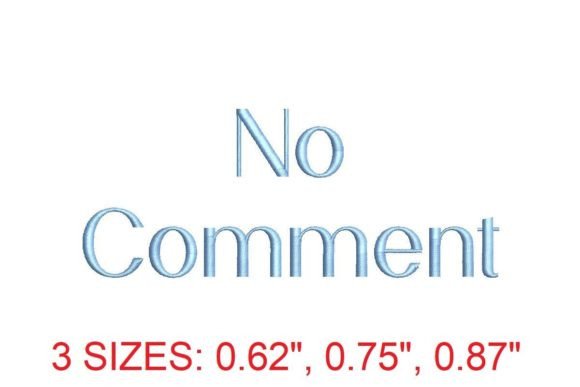
A key differentiator for this specific font is the comprehensive nature of the character set. The download includes 156 individual letters, providing extensive coverage for monogramming and personalization. However, practical evaluation requires looking beyond the character count. Users must verify dimensions relative to their hoop size and design area. It is important to note that the sizes and stitches information typically displayed in product summaries refers specifically to the uppercase "A" and lowercase "a." These two characters serve as benchmarks for density and scale. For precise planning involving wider or taller glyphs, consulting the detailed dimension PDF is necessary to avoid resizing issues that could compromise stitch integrity.
Technical Specifications and Format Compatibility
Versatility in file format is a primary decision factor for embroiderers with mixed-machine environments. The No Comment Embroidery Font is supplied in multiple embroidery file formats, ensuring compatibility with major brands including Brother, Janome, Bernina, and Husqvarna Viking. This multi-format inclusion eliminates the need for third-party conversion software, which can sometimes alter stitch data or lose metadata. When comparing this resource to free or single-format alternatives, the reduction in technical friction is a significant advantage for production workflows.
- Pre-Digitized Integrity: Maintains stitch angles and underlay regardless of the machine brand.
- Benchmark Sizing: Reference the "A/a" metrics for density estimation before committing to full text blocks.
- Character Depth: 156 letters allow for complex phrasing without mixing mismatched font styles.
- Cross-Platform Use: Native support for various machine ecosystems reduces setup time.
Comparing No Comment Against Alternative Typography Options
To make an informed choice, it is helpful to position the No Comment Embroidery Font against other common categories of embroidery lettering. Each category serves different needs, and the "best" option depends entirely on the project context.
Versus Auto-Digitized System Fonts
Many embroidery software packages offer auto-digitizing features that convert standard keyboard fonts into stitches. While convenient, these conversions often lack the nuance of hand-digitized typefaces like No Comment. Auto-digitized text frequently suffers from inconsistent column widths, poor tie-offs, and excessive trims. In contrast, No Comment provides a cohesive stitch architecture. If your priority is speed and you are working on low-stakes practice pieces, auto-digitizing may suffice. However, for retail items, heirloom linens, or garments where durability matters, the intentional engineering of a dedicated embroidery font generally yields superior results with less post-editing.
Versus Custom Hand-Digitizing
Custom digitizing offers ultimate control but requires significant time investment and expertise. Creating a full alphabet from scratch can take dozens of hours. The No Comment Embroidery Font occupies the middle ground between automation and bespoke creation. It offers the polished look of professional digitizing without the per-letter labor cost. For projects requiring a unique brand identity or highly stylized artistic text, custom work remains unmatched. Yet, for standard personalization, monograms, and readable messaging, this pre-made set provides professional aesthetics at a fraction of the time expenditure.
Versus Other Pre-Made Embroidery Fonts
The market contains thousands of pre-digitized fonts. Distinguishing No Comment from generic alternatives involves assessing style versatility and technical documentation. Many budget fonts lack clear sizing data or include limited character sets. The inclusion of 156 characters and specific benchmark data suggests a higher tier of product development. When comparing options, evaluate whether the alternative font provides similar transparency regarding stitch counts and dimensions. A cheaper font that requires constant resizing and testing may ultimately cost more in wasted materials and machine time than a well-documented, slightly more expensive option.
Strengths, Tradeoffs, and Best-Fit Scenarios
No single font solves every embroidery challenge. Recognizing where the No Comment Embroidery Font excels and where it falls short prevents frustration and ensures realistic expectations.
Ideal Use Cases
This font is particularly effective for projects requiring clarity and durability. Its construction makes it suitable for:
- Apparel Personalization: The stitch structure is designed to withstand washing and wear, making it reliable for t-shirts, hoodies, and uniforms.
- Linens and Toweling: Textile-friendly digitizing helps prevent puckering on high-pile or loosely woven fabrics common in home decor.
- Batch Production: Consistent spacing and trim paths facilitate faster run times when producing multiple identical items.
- Mixed Skill Levels: Novices benefit from the forgiving nature of professional digitizing, while experts appreciate the clean baseline that requires minimal editing.
Potential Limitations and Considerations
Despite its strengths, there are scenarios where this font may not be the optimal choice. Users should consider the following tradeoffs:
- Style Specificity: As a distinct typeface, it has a fixed aesthetic. If a project demands a drastically different mood (e.g., ornate Victorian script or ultra-modern minimalist sans-serif), this font may not fit the visual brief.
- Sizing Constraints: While resizable within limits, pushing the font to extreme scales can affect density. Always test stitch-outs at the intended size rather than assuming infinite scalability.
- Learning Curve for Data: New users accustomed to simple font dropdowns may initially find the reliance on benchmark PDFs and separate files more complex than integrated software fonts.
Making the Final Selection Decision
Choosing the No Comment Embroidery Font should be based on a pragmatic assessment of your current needs versus future possibilities. If you are seeking a reliable workhorse font that bridges the gap between creative expression and technical performance, this set warrants serious consideration. It empowers users to say more through quality craftsmanship rather than relying solely on textual content. The ability to captivate an audience often stems from the subtle professionalism of clean stitching, proper registration, and appropriate density—all hallmarks of purpose-built embroidery typography.
Before purchasing or downloading, review the "More Sewing Info" documentation to confirm the physical dimensions match your hoop capabilities. Compare the stitch count of the benchmark "A/a" against your machine’s speed and your project timeline. If the specifications align with your production parameters and the aesthetic complements your portfolio, this font represents a sound investment in your embroidery toolkit. Conversely, if your projects require highly variable styling or experimental artistry, you may need to supplement this set with additional specialized resources. Ultimately, the goal is to select tools that reduce technical barriers, allowing your creativity to manifest through flawless execution. Whether you are personalizing clothing, monogramming linens, or crafting intricate designs, understanding the technical foundation of your chosen typeface is the first step toward elevating your embroidery game.