Lucky Ducky Font: Integrating Whimsical Typography into Machine Embroidery Workflows
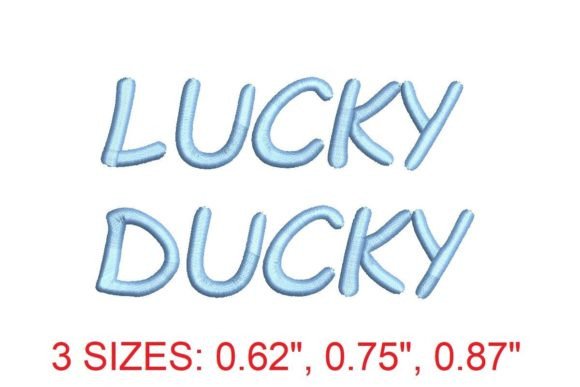
Selecting the appropriate typeface for machine embroidery requires balancing aesthetic appeal with technical feasibility. Unlike digital design or print media, embroidery fonts must account for thread tension, fabric stability, and stitch density. The Lucky Ducky Font represents a specialized solution within this niche, offering a distinct blend of playful character and structural integrity. Introducing the Lucky Ducky Embroidery Font provides creators with a versatile tool for adding whimsy and charm to textile projects while maintaining professional standards of digitization. This typeface is engineered specifically for the constraints of needle and thread, ensuring that its elegant curves translate effectively from screen to fabric without compromising legibility or durability.
Technical Compatibility and File Format Standards
One of the primary considerations for any embroidery digitizer or hobbyist is machine compatibility. The utility of an embroidery font is entirely dependent on its ability to integrate seamlessly with existing hardware ecosystems. Lucky Ducky is designed with broad interoperability in mind, specifically emphasizing compatibility with the PES file format. This format serves as an industry standard for home and semi-professional embroidery machines, particularly those manufactured by Brother and Babylock.
The reliance on PES compatibility ensures that users can transfer designs directly to their machines without requiring extensive third-party conversion software, which can sometimes corrupt stitch data or alter spacing parameters. While the font includes multiple embroidery file formats to accommodate various machine brands, the optimization for PES guarantees that the stitch paths, jump stitches, and trim commands are interpreted correctly by the most widely used consumer embroidery platforms. This technical foundation allows professionals and hobbyists alike to focus on creative application rather than troubleshooting file errors or re-digitizing letters due to format incompatibility.
Analyzing Stitch Density and Sizing Specifications
Understanding the physical dimensions and stitch counts of an embroidery font is critical for achieving high-quality results. Embroidery is a tactile medium where scale dictates performance; a letter that looks perfect at two inches may become illegible or cause fabric puckering at half an inch. When evaluating Lucky Ducky, it is important to note that sizing information is typically referenced using the uppercase "A" and lowercase "a" as baseline metrics. These reference points provide a summary of what is available in the download file, offering a quick gauge of the font's proportions and density.
However, comprehensive project planning requires deeper insight. The full dimension details for all 156 letters in this set are documented in supplementary resources, such as the More Sewing Info PDF often associated with this product. Accessing this granular data is essential for several reasons:
- Variable Width Management: Letters like "W" and "I" have vastly different stitch counts and widths. Knowing these variances prevents hoop sizing errors.
- Density Calibration: Different letters may require different stabilizers based on their stitch concentration. Detailed specs help in selecting between tear-away, cut-away, or water-soluble backings.
- Scaling Limits: Every embroidery font has a minimum and maximum viable size. Exceeding these limits leads to thread breaks or loss of definition. The detailed charts clarify these operational boundaries.
By consulting the complete dimensional specifications rather than relying solely on the sample "A/a" metrics, users ensure that every stitch becomes a stroke of luck rather than a source of frustration during production runs.
Design Characteristics and Aesthetic Versatility
The visual identity of Lucky Ducky lies in its ability to bridge the gap between juvenile playfulness and sophisticated elegance. Many novelty fonts sacrifice readability for theme, resulting in text that is difficult to parse on textured fabrics. Lucky Ducky maintains clear letterforms with consistent x-heights and ascender/descender ratios, making it suitable for monogramming and intricate designs where legibility is paramount.
This balance makes the font exceptionally versatile across different demographics and project types. For children’s apparel, the whimsical nature adds immediate personality. Yet, when rendered in metallic threads or tone-on-tone colorways, the same letterforms take on a vintage, hand-stitched quality appropriate for heirloom sewing or boutique home decor. The design avoids overly complex internal fills that can cause bulk, instead utilizing clean satin stitches and running stitch outlines that sit flat against the fabric. This characteristic is vital for garments worn against the skin, as it minimizes irritation while maximizing visual impact.
Practical Applications Across User Segments
The adaptability of Lucky Ducky extends beyond its visual style to its functional application across diverse user groups. Each segment of the embroidery community leverages the font’s specific attributes to solve unique challenges.
Commercial Embroiderers and Small Business Owners
For business owners, time is money, and consistency is brand equity. Lucky Ducky offers a reliable option for personalized merchandise that requires a friendly, approachable aesthetic. Because the font is pre-digitized with proper pull compensation and underlay, it reduces the risk of registration issues on stretchy fabrics like knits or fleece. This reliability allows commercial operators to offer custom monogramming services with confidence, knowing that the output will be consistent whether they are stitching one prototype or fifty units. The seamless integration with Brother and Babylock multi-needle machines further streamlines production workflows.
Educators and Institutional Craft Programs
In educational settings, clarity and ease of use are prioritized. Lucky Ducky serves as an excellent teaching tool for students learning about typography in textiles. Its distinct letter shapes make it easy to identify stitching errors, while its forgiving design tolerates minor tension adjustments common on classroom machines. Educators can use this font to demonstrate concepts of negative space, thread direction, and color theory without the complexity of more ornate scripts. Furthermore, the availability of detailed sizing documentation supports curriculum development around technical specification reading and project planning.
Hobbyists and Home Creators
For the individual creator, embroidery is often about expression and gifting. Lucky Ducky elevates personal projects by providing a professional-grade alternative to built-in machine fonts, which are often limited in style and size. Whether embellishing quilts, crafting nursery decor, or personalizing tote bags, this font infuses personality into creations effortlessly. The compatibility with standard PES files means hobbyists do not need expensive digitizing software to utilize the font; they can load it directly via USB or network transfer, lowering the barrier to entry for high-quality custom embroidery.
Material Considerations and Stabilization Strategies
While Lucky Ducky is designed for versatility, the final outcome is heavily influenced by material selection. The interaction between the font’s stitch structure and the substrate determines success. When working with this font, consider the following material-specific guidelines:
- High-Pile Fabrics: On terry cloth or velvet, the whimsical strokes of Lucky Ducky can get lost. Using a water-soluble topping is mandatory to keep the stitches visible and crisp. The font’s open design works well here, as it does not create excessive density that might distort the pile.
- Stretch Knits: The playful curves require stable anchoring. A fusible no-show mesh or heavy cut-away stabilizer is recommended to prevent the letters from distorting when the garment is stretched. The font’s inherent pull compensation helps, but proper stabilization is non-negotiable.
- Woven Cottons and Linens: These are ideal substrates for Lucky Ducky. The fabric’s stability allows the delicate details of the font to shine. For heirloom projects, using a lighter weight thread (such as 60wt) can enhance the elegance of the letterforms, shifting the perception from playful to refined.
Optimizing Workflow Integration
To fully leverage the capabilities of Lucky Ducky, users should integrate it thoughtfully into their digital workflow. Although the font comes ready-to-use, advanced users may wish to combine it with other design elements. When merging Lucky Ducky with appliqué shapes or decorative borders, pay attention to stitch order. Placing the text after background fills but before outline stitches usually yields the cleanest edge definition.
Additionally, because the font includes 156 characters, including special symbols and punctuation, creators can construct complete phrases rather than isolated initials. This expands the scope of potential projects from simple monograms to full quotations, labels, and narrative embroidery. Ensuring that your machine’s memory or your editing software can handle the full character set is a preliminary step that prevents mid-project interruptions.
Ultimately, the value of Lucky Ducky lies in its dual nature as both a creative asset and a technical solution. It respects the mechanical realities of embroidery machines while delivering the aesthetic warmth that draws people to the craft. By understanding its specifications, respecting material constraints, and utilizing its broad compatibility, users can transform ordinary textiles into personalized works of art. Whether for commercial production or personal enjoyment, this font demonstrates that technical precision and whimsical charm are not mutually exclusive but can coexist in every carefully placed stitch.