Students Holding Phone Tablet Education Graphics
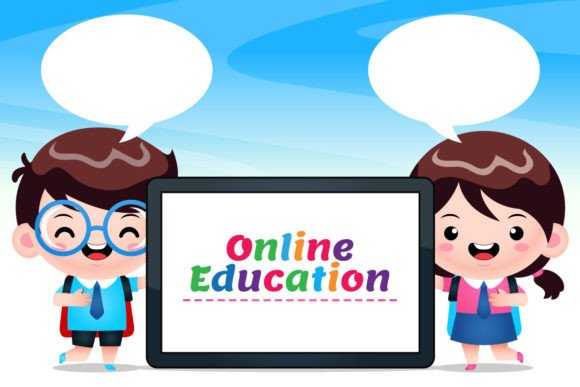
Visualizing modern learning environments requires imagery that accurately reflects how children interact with technology today. The concept of students holding phone tablet education assets provides a versatile visual foundation for creators, educators, and marketers who need to depict digital literacy in an authentic way. Rather than relying on generic stock photography that often feels staged or outdated, these specialized illustrations offer a stylized, approachable aesthetic suitable for a wide range of professional and personal projects. Whether you are designing an educational app interface, creating classroom signage, or developing marketing materials for an ed-tech startup, having access to high-quality vector and raster formats ensures your visuals remain crisp and relevant across all mediums.
Versatility Across Digital and Print Mediums
The primary advantage of utilizing dedicated students holding phone tablet education graphics lies in their adaptability. Modern design workflows rarely exist in a single format; a campaign might require a massive banner for a school hallway, a small icon for a mobile app, and a medium-sized image for a blog post. Vector formats, specifically EPS10 and AI files, eliminate the anxiety of resolution loss. Because vectors are mathematically defined rather than pixel-based, you can scale an illustration of a child using a tablet from the size of a postage stamp to the side of a building without any degradation in quality. This is particularly valuable for large-format printing such as posters, banners, and wall murals in educational settings where pixelation would undermine the professional appearance of the material.
For digital-first projects, the included PNG files with transparent backgrounds at 1200px x 800px and 300 dpi serve as immediate assets for web design and social media. The transparency allows designers to layer these characters over colored backgrounds, gradients, or existing website layouts without needing to manually mask out white boxes. This streamlines the workflow for bloggers and web designers who need to integrate educational themes into their content quickly. Simultaneously, the JPEG versions provide a ready-to-use option for documents, presentations, or platforms that do not support transparency, ensuring you have the right file type for every specific technical requirement.
Enhancing Children’s Educational Materials
Creators of children’s books, puzzles, and game assets face the unique challenge of making technology look friendly and safe. Photorealistic images of devices can sometimes feel cold or overly commercial in a children's context. Illustrated depictions of students holding phone tablet education themes bridge this gap by presenting technology through a warm, artistic lens. These assets are ideal for book covers and interior illustrations where the narrative involves digital learning, coding classes, or remote schooling. The ability to customize colors in vector format means illustrators can match the artwork to the specific color palette of a book series or brand identity, maintaining visual consistency throughout a publication.
Beyond books, these graphics support interactive learning tools. Game developers and puzzle creators can use the vector components to build engaging UI elements or reward screens. For example, a character holding a tablet could serve as the avatar for a tutorial level in an educational game. Because the files are fully editable in Adobe Illustrator, developers can adjust the pose, change the screen content, or modify clothing colors to fit different levels or characters within the game ecosystem. This flexibility reduces the need to commission multiple custom illustrations, saving both time and budget while maintaining a cohesive art style.
Streamlining Marketing and Communication Design
Educational institutions, tutoring centers, and ed-tech companies frequently need to communicate complex ideas about digital learning to parents and stakeholders. Using professional students holding phone tablet education visuals helps convey messages about technological integration more effectively than text alone. When designing brochures, flyers, or party invitations for school events, these illustrations act as visual anchors that immediately signal the topic. The PSD files, sized at 1200px x 800px with 300 dpi, allow marketing teams to open the asset in Adobe Photoshop and add text overlays, logos, or specific messaging directly onto the device screens or surrounding space. This capability transforms a generic illustration into a customized communication tool in minutes.
For stationery and greeting card designers, the charm of these illustrations adds a personal touch to physical products. A thank-you card featuring a student with a tablet might be perfect for teacher appreciation gifts or graduation announcements. The vector format ensures that even when printed on small card stock, the lines remain sharp and the colors vibrant. Additionally, the ability to mix and match patterns and resize elements means designers can create entire product lines—from matching envelopes to gift tags—using a single set of source files. This efficiency is crucial for small business owners and freelancers who need to maximize output without sacrificing quality.
Technical Specifications for Professional Workflows
Understanding the technical deliverables is essential for integrating these assets into professional pipelines. The package includes four distinct file types, each serving a specific purpose in the creative process:
- Vector Files (EPS10 & AI): These are the master files. They allow for infinite resizing, color manipulation, and element separation. If you need to change a shirt color from blue to red or rotate a tablet to a different angle, these files provide the necessary access. They are compatible with industry-standard software like Adobe Illustrator and CorelDRAW.
- PSD Files: At 1200px x 800px and 300 dpi, these layered raster files are optimized for photo editing and compositing. They retain layer information, allowing for non-destructive editing in Adobe Photoshop. This is ideal for adding texture, lighting effects, or combining the illustration with photographic elements.
- PNG Files: Also at 1200px x 800px and 300 dpi, these feature transparent backgrounds. They are the go-to format for web overlays, app interfaces, and digital presentations where background removal is required. The high resolution ensures they look sharp on retina displays and high-density screens.
- JPEG Files: Matching the dimensions and resolution of the PNGs, these include a solid background. They offer universal compatibility for quick previews, email signatures, or platforms that struggle with transparency. They are also useful for proofing and client approvals before final production.
Practical Considerations and Best Practices
While these assets offer significant flexibility, users should consider the specific context of their project to ensure the best results. The illustrated style is inherently stylized, which makes it perfect for kid-friendly and general educational contexts but potentially less suitable for highly technical medical or corporate training materials requiring photorealism. It is important to evaluate whether the artistic tone aligns with your target audience's expectations. For instance, a university-level engineering course might prefer photographic assets, whereas a K-12 STEM program would benefit greatly from this approachable illustration style.
When customizing vector files, maintain the original aspect ratio of key elements to prevent distortion. While vectors can be stretched, doing so to a character’s face or a tablet screen can create an uncanny effect. Instead, use the scaling tools proportionally or adjust individual anchor points to reshape elements naturally. For those new to vector editing, starting with the PSD or PNG versions may be more accessible, reserving the AI/EPS files for when specific modifications are absolutely necessary. Additionally, always verify color profiles before printing; convert RGB vectors to CMYK if sending to a professional offset printer to avoid unexpected color shifts in the final physical product.
Ultimately, students holding phone tablet education graphics represent a practical solution for the diverse needs of modern creators. By providing a comprehensive suite of file formats, from infinitely scalable vectors to web-ready rasters, these assets empower users to execute projects ranging from DIY crafts to large-scale commercial campaigns with confidence. The value lies not just in the image itself, but in the freedom to adapt, modify, and deploy that image exactly where and how it is needed most. Whether enhancing a children’s book, streamlining a marketing workflow, or building an interactive game, having the right technical foundation allows creativity to flourish without technical constraints.