Evaluating Highland Cow Tumbler Wrap Sublimation for 20 Oz Skinny Tumblers
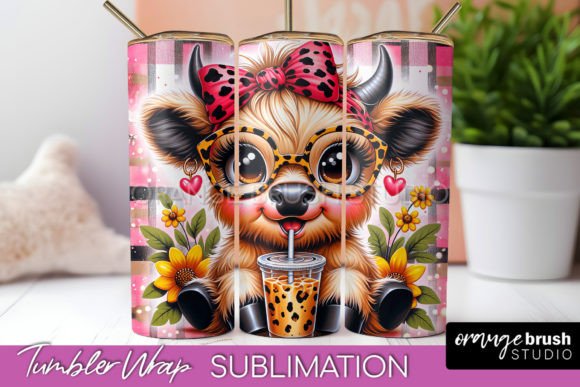
The rise of cottagecore and rustic aesthetics in personalized drinkware has made specific niche designs highly sought after. Among these, the Highland Cow Tumbler Wrap Sublimation stands out as a distinct category for crafters and small business owners focusing on farm-inspired merchandise. Unlike generic bovine clip art or simple text-based layouts, this specific sublimation format is engineered to address the technical and aesthetic requirements of 20 oz skinny tumblers. When evaluating digital assets for sublimation printing, understanding the distinction between a standard image file and a purpose-built wrap template is essential for achieving professional results without excessive post-production editing.
Technical Specifications Versus Generic Imagery
A primary decision factor when selecting a Highland Cow Tumbler Wrap Sublimation file is the dimensional accuracy relative to the physical substrate. Standard digital illustrations found on stock sites often lack the precise aspect ratio required for cylindrical vessels. A dedicated wrap designed for a straight wall 20 oz skinny tumbler typically adheres to a print size of approximately 9.3 x 8.2 inches. This specification is not arbitrary; it accounts for the circumference of standard slim tumblers while providing adequate bleed area for seam alignment.
When comparing this specialized format to generic high-resolution PNGs, several practical differences emerge:
- Seamless Integration: Purpose-built wraps are designed with edge continuity in mind. If the Highland cow illustration extends across the seam, the pattern must align perfectly when wrapped around the cylinder. Generic images rarely account for this horizontal repetition, often resulting in awkward visual breaks or mismatched elements at the back of the tumbler.
- DPI Standards: Professional sublimation requires a minimum of 300 DPI at actual print size. While many online resources offer "high resolution" files, they may only be 300 DPI at a much smaller dimension. Upscaling a low-resolution source to fit a 9.3-inch width introduces pixelation and blurriness that becomes glaringly obvious on glossy tumbler coatings. Verified 300 DPI templates eliminate this quality risk.
- Aspect Ratio Optimization: Resizing a square or portrait-oriented image to fit a landscape tumbler wrap often necessitates cropping key focal points or stretching the artwork unnaturally. A pre-formatted wrap maintains the integrity of the Highland cow illustration within the correct geometric constraints.
Design Style and Market Positioning
Beyond technical fit, the aesthetic approach of Highland Cow Tumbler Wrap Sublimation differs significantly from other popular tumbler categories. In the current market, buyers generally encounter three distinct stylistic approaches when researching farm animal drinkware:
- Photorealistic: High-definition photography of actual cattle. While authentic, these can sometimes appear too stark against white powder-coated tumblers and may show compression artifacts more easily during the heat transfer process.
- Minimalist Line Art: Simple silhouettes or outlines. These are easy to print but often lack the visual impact required for premium pricing or gift items.
- Illustrative Digital Art: The sweet spot for most sublimation businesses. This style combines the charm of hand-drawn textures with the vibrancy achievable through dye-sublimation ink. It allows for rich browns, creams, and pastoral backgrounds that translate exceptionally well onto coated metal surfaces.
For creators targeting an adult demographic aged 20–50, the illustrative digital art style often offers the best balance of sophistication and trend relevance. It avoids the juvenile appearance of cartoonish vectors while remaining more forgiving than raw photography regarding color consistency across different printer profiles. When evaluating a specific design, consider whether the color palette complements common tumbler base colors like matte black, white, or speckled enamel.
Tradeoffs: Digital Downloads Versus Physical Transfers
An important comparison point involves choosing between purchasing a digital download (PNG) versus buying pre-printed sublimation transfer paper. For those investing in Highland Cow Tumbler Wrap Sublimation as a digital asset, there are distinct advantages and limitations compared to outsourcing the print.
Advantages of Digital Downloads:
- Customization Control: Owning the 300 DPI PNG allows for personalization. You can add customer names, adjust background hues to match brand guidelines, or combine the Highland cow element with other graphics before printing. Pre-printed transfers lock you into a static design.
- Cost Efficiency at Scale: Once purchased, the marginal cost per unit is limited to ink and paper. For production runs exceeding five units, digital downloads become significantly more economical than buying individual transfer sheets.
- Inventory Flexibility: Digital files do not degrade, expire, or require climate-controlled storage. You can reprint a replacement for a damaged batch instantly without waiting for shipping.
Limitations to Consider:
- Equipment Dependency: You must own or have access to a sublimation printer capable of handling 9.3-inch widths. Standard desktop printers may require tiling or specialized wide-format equipment.
- Color Management Responsibility: Achieving the exact browns and golds seen in the preview requires proper ICC profiling. With pre-printed transfers, color accuracy is the vendor’s responsibility; with digital files, it is yours.
- No Physical Proof: Screen calibration varies. Without a physical sample, there is always a slight variance between monitor display and final output. Testing on scrap material is mandatory before committing to expensive blanks.
Sizing Considerations and Adaptability
While the standard specification for this niche is 9.3 x 8.2 inches, real-world application requires awareness of manufacturing tolerances. Not all "20 oz skinny tumblers" are identical. Variations exist between straight-wall and tapered models, as well as between brands. A robust Highland Cow Tumbler Wrap Sublimation file should be treated as a starting template rather than a rigid constraint.
Experienced sublimation professionals recommend measuring the specific blank circumference before printing. If your tumbler measures 9.1 inches in circumference rather than 9.3, the extra 0.2 inches in the digital file serves as necessary overlap for securing the transfer with heat-resistant tape. Conversely, if using a slightly larger vessel, the high-resolution nature of a 300 DPI source allows for modest scaling (typically up to 10-15%) without visible degradation. However, scaling beyond this threshold risks softening fine details in the fur texture or floral accents commonly paired with Highland cow motifs.
This adaptability makes digital wraps superior to fixed-size alternatives for shops that source blanks from multiple suppliers. Maintaining a master file at the larger dimension ensures compatibility across inventory variations, whereas purchasing exact-fit transfers for each supplier creates logistical complexity.
Assessing Value and Usage Rights
When comparing options in the marketplace, licensing terms are as critical as image quality. Many free or low-cost alternatives restrict usage to personal projects only. For entrepreneurs building a product line around Highland Cow Tumbler Wrap Sublimation, verifying commercial use rights is non-negotiable. A legitimate commercial license permits the sale of finished physical products but typically prohibits reselling or sharing the digital file itself.
Furthermore, evaluate the watermark policy. Preview images should be watermarked to protect intellectual property, but the delivered file must be completely clean. Some vendors provide "low-res proof" files alongside the full-resolution version; ensure you are working with the correct asset before production. The absence of watermarks on the final PNG is a baseline expectation for any professional-grade sublimation resource.
When to Choose Alternative Solutions
Despite its versatility, Highland Cow Tumbler Wrap Sublimation is not universally the optimal choice. Understanding when to pivot to alternative formats prevents wasted resources:
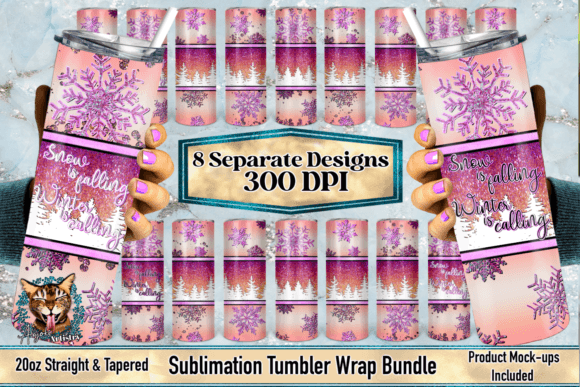
- Tapered Tumblers: If working with curved or tapered vessels, a straight-wall wrap will distort. Specialized tapered templates with warped geometry are required instead.
- Non-Sublimation Surfaces: For glass, ceramic, or uncoated metals, sublimation will not bond. UV DTF, vinyl decals, or laser engraving would be more appropriate technologies for those substrates.
- One-Off Personal Gifts: If producing a single item with no intention of future replication, purchasing a ready-to-press transfer may be more time-efficient than setting up color profiles and test prints for a digital file.
- Complex Multi-Layer Designs: If the desired aesthetic requires textured overlays, glitter effects, or metallic finishes that cannot be achieved with CMYK ink alone, hybrid approaches combining sublimation with epoxy or foil may be necessary. Pure sublimation wraps produce smooth, flat finishes only.
Making an informed decision requires balancing artistic vision with production realities. The Highland Cow Tumbler Wrap Sublimation format excels when creators need reliable, scalable, and commercially viable assets for straight-wall skinny tumblers. By prioritizing verified dimensions, appropriate resolution, and flexible licensing over novelty or lowest price, makers can build sustainable product offerings that meet both technical standards and customer expectations. Whether sourcing from established designers like Helena or exploring broader marketplaces, applying these evaluation criteria ensures that selected resources support long-term crafting success rather than serving as disposable novelties.